
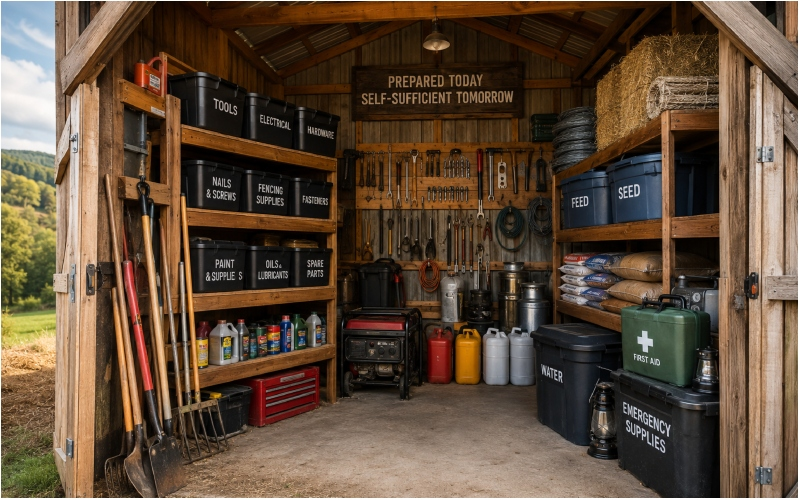
When you live an hour or more from the nearest hardware store, you learn to think differently about storage. A quick run for a missing part isn’t quick anymore. A forgotten supply can mean a wasted weekend or a stalled project. That’s why so many people living off-grid or working toward self-sufficiency put serious thought into what goes inside their barn sheds. The goal isn’t just to keep things dry. It’s to create a dependable backup of the tools, materials, and supplies you need to keep your property running no matter what the weather or the week throws at you. This guide walks through the categories worth stocking when you’re far from town, plus a few lessons learned from people who’ve been doing it for years.
Start With the Things You Can’t Easily Replace
The first question to ask yourself is simple. If this item broke, got wet, or ran out, how hard would it be to replace? If the answer is “I’d have to drive two hours and hope they have it in stock,” that item belongs in your barn.
For most people living rural, that list starts with spare building materials. A bundle of shingles. Extra pressure-treated lumber. A few sheets of plywood. Nails, screws, and hardware in sizes you actually use. These aren’t exciting purchases, but when a storm pulls up a section of your roof or an animal damages a wall, having the materials on hand means you can fix it the same day instead of waiting until the next trip to town. The same logic applies to fencing supplies. If you keep animals or just maintain a long property line, stock extra posts, wire, and fasteners. Fence damage tends to happen at the worst times, and a down fence is a problem that won’t wait.
Tools: The Backbone of Self-Sufficiency
Your tools are what make everything else possible. When you’re miles from a rental shop or a neighbor who can lend you what you need, your own collection has to cover more ground. Think about the work you do across a year. Splitting wood. Fixing fence. Maintaining equipment. Building and repairing outbuildings. Each of those jobs has a set of tools behind it, and storing them properly keeps them ready when you need them.
Hand tools are the foundation. A solid set of wrenches, hammers, pry bars, and saws will handle most day-to-day repairs. Keep them clean, dry, and organized so you can find what you’re looking for without digging. Wall-mounted racks and labeled bins are worth the small effort it takes to set them up.
Power tools come next. If you’re off-grid, you may be running on solar or a generator, so think about what you actually have power for. Cordless tools with charged spare batteries are often more practical than corded ones. Store batteries in a dry, temperature-stable spot to extend their life.
Don’t forget the maintenance tools. Chainsaw files, sharpening stones, spare chains, and bar oil. Extra hydraulic fluid and filters for equipment. A grease gun. These are the small things that keep your bigger tools working, and they’re easy to overlook until you need them.
Fuel, Lubricants, and Power Backup
Living away from town means you’re probably more dependent on your own equipment than most people. Chainsaws, generators, tractors, and ATVs all need fuel and routine maintenance to stay reliable. Store fuel in approved containers and keep track of how much you have. A good habit is rotating your supply so older fuel gets used first. Fuel stabilizer is cheap insurance if you’re storing fuel for months at a time.
Keep lubricants and common maintenance fluids on hand too. Motor oil, hydraulic fluid, bar and chain oil, and a general-purpose grease will cover most of what your equipment needs. Store them off the floor on a shelf where temperatures stay steady. If you rely on a generator for backup power, store what you need to keep it running. Spare oil, filters, and spark plugs are small and inexpensive, but they’re the difference between a generator that starts on the third pull and one that doesn’t start at all.
Feed, Seed, and the Supplies That Keep Your Property Productive
If part of your self-sufficiency plan involves growing food or keeping animals, your barn becomes the hub for the supplies that keep that side of your life going. For gardeners, that means extra seed. Store it in a cool, dry place in sealed containers. Keep a running inventory so you know what you have and what’s getting old. Add amendments you use regularly, like lime or fertilizer, in sealed bins that keep moisture and pests out.
For anyone keeping animals, feed storage is one of the most important things you’ll manage. Keep feed in metal or heavy plastic containers with tight lids. This keeps it fresh and discourages rodents and other animals from getting into it. Rotate your stock so older feed gets used first, and keep track of how much you have so you’re not caught short between trips to town. Store hay and bedding off the ground and away from the walls of the barn. Even a small gap lets air move and helps prevent moisture buildup, which is the main thing that ruins stored hay.
Water and Emergency Supplies
A lot of off-grid properties rely on wells, springs, or rainwater collection. Any of those can have a bad day. A pump fails. A drought drops your collection rate. A freeze cracks a line. It’s worth storing a backup of water and the parts you’d need to keep water moving. A spare pump, extra fittings, pipe in the size you use, and a stock of repair clamps can get you back online without a trip to town. Keep a few gallons of treated drinking water on hand too, just in case.
The same thinking applies to emergency supplies. A basic first aid kit lives in the house, but a second one in the barn makes sense if you spend most of your working hours there. Add a flashlight, spare batteries, and a small radio. If the power goes out and you’re working at the far end of your property, you don’t want to walk back to the house to find a light.
Seasonal Gear and the Things You Only Need Part of the Year
One of the quiet benefits of having a well-organized barn is that it gives you a place to put the things you only use part of the year. Winter gear in summer. Summer gear in winter. Hunting equipment in the off-season. Gardening tools after the last harvest.
Rotate these as the seasons change. When you pull out what you need for the current season, take a minute to inspect what you’re putting away. Sharpen blades. Oil metal parts to prevent rust. Replace anything that’s worn out while you have time, not when you’re rushing to use it again next year.
This habit alone adds years to the life of your gear, and it’s one of the easiest things to overlook when you don’t have a dedicated space to store things properly.
A Few Habits That Make the Whole System Work
Stocking a barn is one thing. Keeping it useful is another. A few habits make a big difference. Keep an inventory. It doesn’t have to be fancy. A notebook on a shelf or a simple spreadsheet works. The point is to know what you have so you don’t buy duplicates in town and so you can see when you’re running low on something important.
Label everything. Containers that look the same on the outside can hold very different things on the inside. A few minutes with a marker and some tape saves hours of searching later. Check on your stock regularly. Make it part of a monthly routine. Look for signs of moisture, pests, or anything that’s past its useful life. Catching a small problem early keeps it from becoming a big one. Finally, store heavy things low and lighter things high. It’s a simple rule, but it makes your barn safer and easier to move around in.
The Bottom Line
Living miles from town changes the way you think about storage. You stop thinking of a barn as just a place to keep things out of the rain and start thinking of it as part of how you stay ready for whatever comes up. The right supplies, stored the right way, give you the ability to handle repairs, weather surprises, and the daily work of running a property without depending on a trip to town.
Start with the things you can’t easily replace. Add the tools that keep your property working. Build out from there based on what you actually do across the year. Over time, your barn becomes more than storage. It becomes the backup plan you rely on, and that’s worth the effort it takes to set it up right.

Jack Ayzal is the lead editor of Trending Magazine. He focuses on practical home improvement, real-estate decisions, and local service guidance. For the past eight years he has researched contractor practices, spoken with homeowners and tradespeople, and tracked how local rules and market conditions affect everyday projects. His aim is to give readers clear, usable information they can act on without sales pressure.