
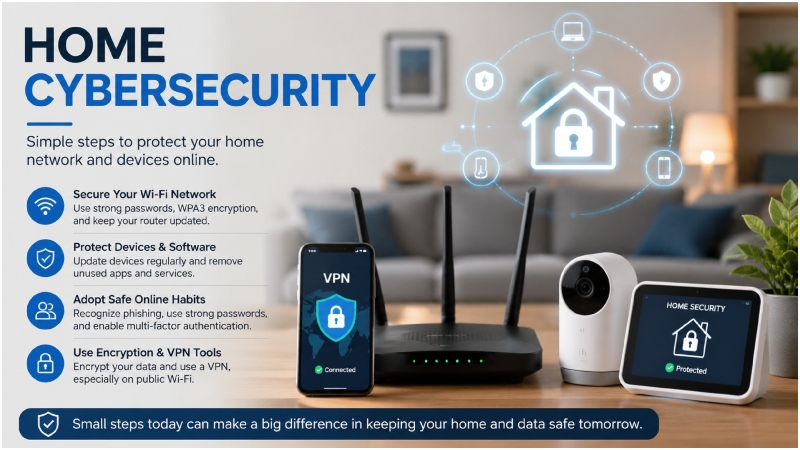
Your home network connects everything from laptops and smartphones to smart TVs and thermostats, and every one of those devices is a potential entry point for cybercriminals. As threats grow more sophisticated, taking a proactive approach to home cybersecurity has never been more important.
Secure your home Wi-Fi network
Your router is the gateway to your entire household’s connected life, which makes it a prime target. Default credentials, outdated firmware, and weak encryption all create easy opportunities for attackers. The Federal Trade Commission recommends updating your router’s firmware regularly, changing the default admin password, and enabling WPA3 encryption where available. It’s also worth creating a separate guest network for smart home devices, which tend to have weaker built-in security than phones or computers. Small configuration changes at the router level can limit an attacker’s ability to move across your network.
Strengthen device and software security
Every connected device in your home, including smart plugs, baby monitors, and voice assistants, can become a vulnerability if it’s running outdated software. Keeping operating systems and apps updated patches known security flaws before attackers can exploit them. The same applies to removing apps and services you no longer use, which reduces your overall exposure. According to Varonis, there were on average 820,000 IoT attacks per day in 2025, with smart home devices increasingly in the crosshairs. Treating every connected device as a security responsibility, not just your laptop, is essential.
Adopt safe online habits across the household
Technology alone can’t protect a household if the people using it aren’t aware of the risks. Phishing is the most reported cybercrime in the United States, with the FBI’s Internet Crime Complaint Center logging 193,407 complaints in 2024. Establishing household norms around recognizing suspicious emails, avoiding unverified downloads, using strong unique passwords, and enabling multi-factor authentication on key accounts makes a meaningful difference. These habits are especially important to establish with children and older adults, who are statistically more likely to engage with phishing attempts.
Enhance privacy with encryption and VPN tools
Even a well-secured home network has its limits when devices leave the house. A free VPN for iPhone encrypts your internet traffic and masks your IP address when you’re on public Wi-Fi, which is a common attack surface that many people overlook. At home, a VPN adds an additional layer of protection for financial transactions and personal data, reducing the risk of interception from third parties or tracking by advertisers.
Securing your home network doesn’t require a cybersecurity degree, but it needs consistency. The right tools and a few household ground rules go a long way toward keeping your data where it belongs.

Jack Ayzal is the lead editor of Trending Magazine. He focuses on practical home improvement, real-estate decisions, and local service guidance. For the past eight years he has researched contractor practices, spoken with homeowners and tradespeople, and tracked how local rules and market conditions affect everyday projects. His aim is to give readers clear, usable information they can act on without sales pressure.