
Key Takeaways
- Drain snaking and hydro jetting address different kinds of drain problems.
- Snaking is often useful for a simple, localized blockage near one fixture.
- Hydro jetting can provide a more complete cleaning when grease, sludge, scale, or recurring buildup is involved.
- A camera inspection can help reveal roots, cracks, offsets, corrosion, or collapsed pipe sections.
- Neither cleaning method repairs a structurally damaged sewer line.
- The right approach depends on the blockage, pipe material, pipe age, and the actual condition of the line.
Why The Same Clog Keeps Coming Back
A recurring clog is usually more than a minor inconvenience. When a sink, shower, toilet, or sewer line repeatedly slows down or backs up, the underlying cause may still be inside the pipe. A quick clearing can restore flow temporarily, but it may leave residue on the pipe walls or fail to address a damaged section that catches debris over time.
For homeowners comparing options, professional hydro jetting and drain cleaning in Katy, TX can be worth considering when ordinary clearing has not stopped the problem from returning. The goal should not simply be to get water moving again. It should be to identify why the line keeps clogging and choose a method that fits the condition of the plumbing.
Repeat blockages commonly develop from grease and food residue, hair and soap scum, mineral scale, wipes, paper products, or small foreign objects. In sewer lines, tree roots can enter through joints or cracks and create a rough surface where waste collects. Older pipes may also shift, corrode, sag, or separate, creating conditions that no simple cleaning can permanently solve. The pattern matters. A single slow bathroom sink may point to a local issue near that fixture. Multiple slow drains, toilet bubbling, or water backing up into a tub can indicate a larger blockage in a branch line or main sewer line. Understanding that distinction helps prevent homeowners from treating a serious line problem as a routine sink clog.
How Drain Snaking Works
Drain snaking uses a flexible rotating cable, often called an auger, to reach a blockage. Depending on the cable head and the material causing the clog, the tool may break through the obstruction, pull it back, or create an opening that allows water to drain again.
When Snaking May Be A Good Fit
- Only one sink, tub, shower, or toilet is affected.
- The clog is new and does not appear to be a repeat issue.
- The blockage is likely close to the fixture.
- Hair, paper, soap buildup, or a small object is the likely cause.
- The pipe is older or fragile, so a cautious first approach is appropriate.
Snaking can be effective, but it does not always clean the full interior surface of a pipe. A cable may punch through grease or sludge without removing the coating left behind. If that material remains in place, water may drain normally for a while, then slow down again as new debris sticks to the residue.
How Hydro Jetting Works
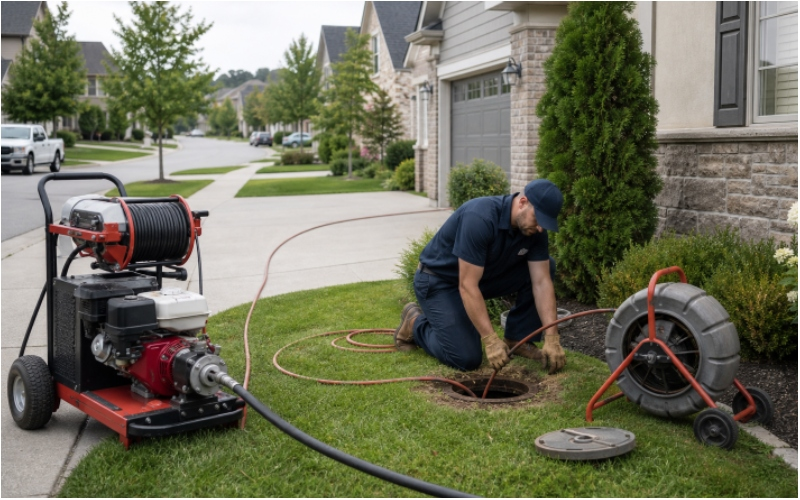
Hydro jetting is a professional drain-cleaning method that sends pressurized water through a hose and specialized nozzle. The water breaks up and flushes away grease, sludge, scale, sediment, and other buildup that may be coating the inside of the line. It is generally intended to clean more thoroughly than a cable alone. Hydro jetting is not a repair method. It can clean a pipe, but it cannot seal a crack, reconnect a separated joint, correct a severe offset, or rebuild a collapsed section. When structural damage is causing the repeat clog, cleaning may still be useful for diagnosis or temporary relief, but repair is usually needed for a lasting solution.
When Hydro Jetting May Make Sense
- The same drain or sewer line clogs repeatedly.
- Several fixtures drain slowly at the same time.
- Grease, soap residue, sludge, or mineral buildup is suspected.
- A previous cable cleaning only provided short-term relief.
- The main sewer line needs a more complete cleaning before further assessment.
- The pipe has been evaluated and appears suitable for pressurized cleaning.
Hydro Jetting Vs. Snaking: The Practical Difference
- Main purpose: Snaking focuses on breaking through or removing a specific obstruction. Hydro jetting focuses on washing the buildup from the pipe interior.
- Best use: Snaking often suits simple, localized clogs. Hydro jetting often suits heavy buildup and recurring blockages.
- Cleaning depth: A snake may restore an opening through the blockage. Hydro jetting may remove more residue along the pipe walls.
- Pipe evaluation: Inspection is useful before either method, but especially important before using high-pressure water in an older or questionable line.
- Long-term results: Either method can provide relief, but lasting results depend on whether buildup, roots, pipe damage, or another issue is actually causing the backup.
Why A Camera Inspection Should Come First In Some Cases
Choosing the strongest cleaning method without checking the pipe can lead to the wrong solution. A sewer camera inspection can help locate the blockage and show whether the line has root intrusion, cracks, corrosion, standing water, shifted joints, or a broken section. It replaces guesswork with a clearer view of what is happening underground or behind walls. Cleaning and inspection are often used together in professional sewer work. In one EPA sewer-line inspection project, crews cleared debris before using camera equipment to assess line conditions and identify damage. The scale is different from residential plumbing, but the basic principle is similar: clear access when needed, then inspect the pipe before deciding on repairs.
Warning Signs That Need Inspection
- Backups return soon after a drain is cleaned.
- Several drains back up at once.
- Toilets bubble when a sink, washer, or shower is running.
- A sewage odor repeatedly appears indoors or outdoors.
- Roots are found in debris removed from the line.
- Water remains in the pipe after the blockage has been cleared.
- The property has older clay, cast-iron, or heavily corroded piping.
When Hydro Jetting May Be The Wrong Choice
High-pressure cleaning is not appropriate for every sewer line. A weakened pipe may need a different approach first, particularly if inspection shows a collapse, major crack, separated joint, severe offset, advanced corrosion, or a low spot holding standing water. In those cases, pressurized cleaning may not address the cause and could be unsuitable for the line’s condition. A professional may instead recommend mechanical clearing, targeted root removal, spot repair, trenchless pipe rehabilitation, or replacement. The best choice depends on the inspection findings, not on which tool sounds more powerful.
A Practical Decision Process For Homeowners
- Record the symptoms. Note which fixtures are affected, how often the problem returns, and whether backups happen after certain activities.
- Identify the pattern. One affected fixture may mean a local clog. Multiple fixtures may mean a branch or main sewer line issue.
- Ask about the cause. Grease, scale, roots, and pipe damage require different solutions.
- Request inspection when appropriate. A camera can separate ordinary buildup from a structural defect.
- Match the method to the evidence. Choose snaking, hydro jetting, repair, or replacement based on pipe condition.
- Confirm the outcome. Test drainage and consider a follow-up inspection when the line has a history of recurring trouble.
Simple Habits That Help Prevent Repeat Clogs
- Keep grease, cooking oil, and fat out of drains.
- Use drain screens in showers and tubs to catch hair.
- Do not flush wipes, paper towels, hygiene products, or other non-flushable items.
- Limit food scraps sent through a garbage disposal.
- Address slow drains before they develop into full backups.
- Keep records of prior cleanings, inspections, and repairs.
- Ask about preventive maintenance if the property has older sewer piping or a history of roots.
Final Perspective
The right fix for a recurring clog is not always the most aggressive one. A drain snake may be enough for a simple blockage near one fixture. Hydro jetting may be a stronger option when heavy buildup keeps returning. When the pipe itself is cracked, shifted, corroded, or collapsed, however, cleaning alone will not solve the underlying problem. Start with the symptoms, confirm the cause, and select the method that fits the condition of the line.

Jack Ayzal is the lead editor of Trending Magazine. He focuses on practical home improvement, real-estate decisions, and local service guidance. For the past eight years he has researched contractor practices, spoken with homeowners and tradespeople, and tracked how local rules and market conditions affect everyday projects. His aim is to give readers clear, usable information they can act on without sales pressure.