
Table of Contents
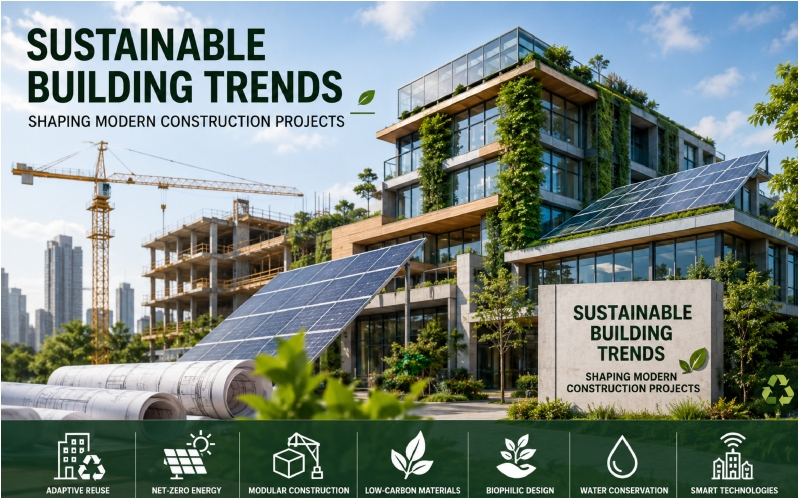
- Adaptive Reuse: Breathing New Life into Existing Structures
- Net-Zero Energy Buildings: Balancing Consumption and Production
- Modular Construction: Efficiency and Waste Reduction
- Low-Carbon Materials: Reducing Environmental Impact
- Biophilic Design: Connecting Buildings with Nature
- Water Conservation Systems: Sustainable Resource Management
- Smart Technologies: Enhancing Building Performance
- Conclusion
Sustainability has rapidly shifted from a trend to a fundamental requirement in the construction industry. As environmental concerns intensify worldwide, construction leaders are reimagining their methods to create efficient, durable, and eco-friendly environments. Leveraging modern technology, innovative materials, and forward-thinking design principles, the industry is now setting new standards for responsible development. Companies at the forefront of this movement, such as commercial construction companies in Idaho, demonstrate that sustainable approaches yield long-term benefits for businesses, communities, and the planet. The deliberate adoption of eco-friendly practices not only conserves resources but also often leads to significant reductions in long-term costs and boosts operational efficiencies. Today’s builders are focused on both optimizing resources and minimizing waste while creating healthier environments for building occupants. Early adoption of these trends provides a competitive edge and aligns with growing demand for green certifications and government incentives. This article unpacks the most influential trends, showing how they shape the construction landscape for the future.
Adaptive Reuse: Breathing New Life into Existing Structures
Adaptive reuse is transforming the concept of sustainability in construction by repurposing old structures for new uses. By maximizing embodied carbon in an existing building, this practice preserves history while drastically reducing demolition waste and the energy required for new construction. An example can be seen in Detroit, where historical buildings have been revamped into modern mixed-use spaces, maintaining cultural integrity and ecological commitment. Adaptive reuse projects often surpass traditional new builds in community and environmental impact, inspiring cities nationwide to rethink older assets. This innovative approach also sparks economic revitalization in neighborhoods that might otherwise decline. By turning unused warehouses, schools, or churches into vibrant commercial or residential spaces, developers breathe economic vitality back into local communities and provide unique architectural character. Adaptive reuse represents a win-win: environmental responsibility is paired with cultural preservation and social benefits, setting an example for holistic progress.
Net-Zero Energy Buildings: Balancing Consumption and Production
Net-zero energy buildings (NZEBs) aim to balance energy consumed and energy produced annually, often through on-site renewable energy sources such as solar panels. This goal requires integrating advanced insulation, passive design strategies, and energy-efficient HVAC systems. Municipalities are responding by passing codes that require new public buildings to adhere to net-zero standards. The NZEB trend is spreading quickly, backed by increased awareness, better technologies, and regulatory support. Pioneering net-zero campuses and commercial centers often become educational hubs, inspiring broader adoption. Developers are also leveraging digital tools to track energy consumption, ensure compliance, and refine designs. Ultimately, these buildings create self-sustaining energy loops that lessen reliance on traditional power grids, increase resiliency, and provide robust operational cost savings for years to come.
Modular Construction: Efficiency and Waste Reduction
In modular construction, building components are fabricated in controlled factory settings and then assembled on-site. This approach slashes waste, sometimes by up to 90 percent, through precise engineering and systematic recycling of unused materials. Shorter construction timelines and reduced site disturbance are additional benefits that support environmental sustainability. Modular methods also enhance safety and deliver higher quality through standardized processes, making them an attractive solution in fast-changing urban landscapes. Beyond the ecological advantages, modular building is increasingly recognized for its flexibility in design and function. Healthcare facilities, hotels, and educational buildings often use modular systems to adapt quickly to shifting demands. Customizable modules allow clients to scale operations or transform layouts with ease, reflecting a proactive response to evolving community and market needs.
Low-Carbon Materials: Reducing Environmental Impact
The use of low-carbon construction materials is central to reducing global emissions. Innovations like self-healing concrete, which can fill its own cracks and extend its lifespan, and mass timber, a renewable substitute for concrete and steel, are revolutionizing the industry. These alternatives play a critical role in curtailing the lifecycle emissions associated with the built environment while enhancing durability and structural integrity. Emerging bio-based insulation options, recycled aggregates, and geopolymer cements are also contributing to a circular building economy. Specifying these materials reduces the depletion of finite natural resources and reduces both embodied and operational carbon footprints. As demand for sustainable construction rises, the development and adoption of these materials are only expected to accelerate.
Biophilic Design: Connecting Buildings with Nature
Biophilic design fosters well-being by harmonizing the built environment with natural elements. Incorporating living walls, ample daylight, and water features, these spaces improve air quality and mental health while slashing energy demand. Office environments with biophilic features have been shown to raise productivity and satisfaction among occupants, making this design philosophy both an environmental and economic imperative in modern workplaces.
The emphasis on biophilic principles in urban planning also creates opportunities for rooftop gardens, interior courtyards, and strategically placed greenery to combat the “heat island” effect. This results in more livable spaces that invite connection between people and their environment, contributing to both personal well-being and local biodiversity. Biophilic design demonstrates that sustainability can provide both practical outcomes and emotional resonance.
Water Conservation Systems: Sustainable Resource Management
Efficient water use is a critical part of sustainable construction. Advanced systems such as rainwater harvesting, low-flow fixtures, and greywater recycling help buildings meet their needs while easing demand on municipal water supplies. By reducing overall water use by up to 40 percent, these technologies deliver significant savings and support sustainability goals through responsible resource management. In regions facing water scarcity or drought, such integrated systems are not just advantageous; they are essential. Smart monitoring and leak-detection tools are now being deployed to prevent wastage further and encourage stewardship across portfolios. Sustainable water management not only fosters resilience but also serves as a prerequisite for long-term viability in development projects nationwide.
Smart Technologies: Enhancing Building Performance
Smart building technologies have revolutionized performance management through AI-enabled systems, real-time sensors, and integrated controls. These tools detect trends, track efficiencies, and allow facility managers to optimize energy use seamlessly. By adopting Internet of Things (IoT) devices and intelligent systems, buildings cut operational costs and environmental impacts, reflecting a broader move toward data-driven sustainability in construction. Building automation systems can also monitor occupancy and adapt lighting, temperature, and ventilation accordingly, leading to further efficiency gains. Predictive maintenance and remote diagnostics help prevent downtime, enabling buildings to operate at peak performance. Ultimately, the fusion of digital intelligence with sustainable construction pushes the boundaries of what modern buildings can achieve.
Conclusion
Sustainable building trends are key to future-proofing construction projects and upholding environmental stewardship. Practicing adaptive reuse, pursuing net-zero standards, embracing modular methods, and specifying low-carbon materials are fundamental strategies. Pairing these with biophilic design and water-saving systems ensures that buildings meet both performance and occupant demands. As the industry continues to innovate, these trends will play a pivotal role in shaping resilient and environmentally conscious communities for generations to come. Builders, architects, and stakeholders each have a role in championing new solutions that balance growth with responsibility. Through continual investment in research, technology adoption, and education, the construction industry can accelerate the shift toward a low-impact future. The pursuit of sustainability is now a shared journey, one that touches every aspect of planning, building, and living, leaving a lasting legacy for both people and the planet.

Jack Ayzal is the lead editor of Trending Magazine. He focuses on practical home improvement, real-estate decisions, and local service guidance. For the past eight years he has researched contractor practices, spoken with homeowners and tradespeople, and tracked how local rules and market conditions affect everyday projects. His aim is to give readers clear, usable information they can act on without sales pressure.