
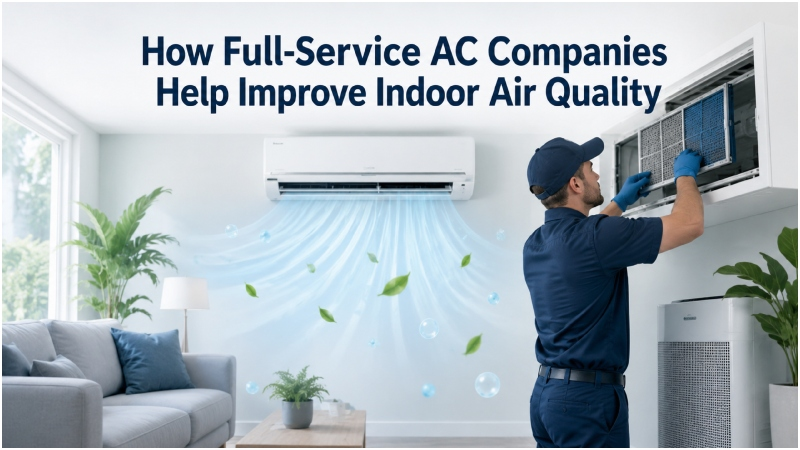
People spending most of their time inside their homes require a well-maintained cooling system. The air inside can carry dust, allergens, mold spores, or chemical pollutants. These can affect health by causing headaches, allergy flare-ups, fatigue, and respiratory problems.
A well-maintained AC system does more than cool; it also filters out the dust particles and allergens to circulate good-quality air. This article covers key ways that professional full-service AC company providers improve indoor air quality for homeowners.
High Efficiency Particulate Filter Installation
A high-efficiency particulate air filter traps tiny particles that standard filters simply miss. These particles include pet dander, dust mites, pollen, mold spores, and fine smoke particles. Once a technician installs the right filter for a specific system, the air handler pulls contaminated air through the filter media and returns cleaner air to the room. A proper filter match also protects the AC equipment from debris buildup on the coil. Homeowners who schedule regular filter replacements notice fewer allergy symptoms and less dust on surfaces. The right filter size and MERV rating make a measurable difference in both air cleanliness and system longevity.
Ultraviolet Light Purifiers for Pathogen Control
Ultraviolet light purifiers work inside the air handler to neutralize bacteria, viruses, and mold that grow on coil surfaces. These pathogens multiply quickly in the cool, damp environment near the evaporator coil. A UV lamp installed by a certified technician targets those organisms at the source before they circulate through duct channels. Studies show that UV-C light disrupts the DNA of airborne microorganisms and prevents them from reproducing. Households with young children, elderly residents, or allergy sufferers benefit most from this added layer of protection. A qualified technician determines the correct lamp wattage and placement for maximum effectiveness in each system.
Whole Home Dehumidifier Integration Success
Excess moisture inside a home creates the ideal environment for mold growth, dust mite activity, and musty odors. A whole-home dehumidifier connects directly to the central AC system and removes moisture from conditioned air before it reaches each room. Proper humidity levels (generally between 30 and 50 percent) reduce the likelihood of mold colonies forming on walls, ceilings, and in duct systems. Technicians calibrate the dehumidifier to work in coordination with the air handler so the two units do not conflict. Homeowners in humid climates notice a significant drop in allergy and asthma triggers after a whole-home unit is installed. A well-integrated dehumidifier also reduces the workload on the AC system, which extends the life of the equipment.
Deep Duct Sanitization and Seal Integrity
The ducts deliver air that has been conditioned through the air handler and into the various rooms being serviced by the air conditioning system. During the course of time, dust, debris, and mold build up within these ducts and are redistributed into the living environment with each operating cycle of the air conditioning system. A full-service air conditioning contractor offers complete duct cleaning services to rid the interior surfaces of the ducts of any and all contaminants as well as improving overall airflow quality.
Fresh Air Intake System Optimization
Pollutants tend to be confined in many residences where only recirculated indoor air is used, leading to a high concentration of pollutants with no outdoor dilution. To solve this issue, fresh air intake systems supply a controlled amount of outdoor air into the residence, which becomes properly mixed with conditioned indoor air prior to being distributed throughout the house. The technician will calculate the proper intake volume by reviewing the home size, the number of occupants, and prevailing climate conditions.
Carbon Monoxide Sensor Safety Protocols
Having no smell and no visible colour makes carbon monoxide (CO). One of the most deadly indoor air quality threats that your family faces in your home. A defective furnace, water heater, or gas appliance can create high concentrations of this Colourless and Odourless gas. But it can release that gas into the living space without any visual signal. Certified technicians examine all of the fuel-burning appliances connected to your home’s HVAC system to ensure that heat exchangers are free of cracks or corrosion.
These technicians also check existing CO detectors and recommend proper mounting locations above and below floors, if required, for proper readings. Sensors that are installed at your air handler can detect CO before it has time to spread throughout the duct system, providing extra time for the evacuation of residents. An extensive inspection schedule identifies emerging equipment problems before they turn into major threats to indoor air quality.
Clean indoor air starts with a well-maintained AC system. Filters, UV purifiers, dehumidifiers, and sealed ducts all work together to reduce allergens, moisture, and harmful pathogens. A trusted full-service AC company brings the technical skill to address each of these factors the right way. As a simple first step, schedule a professional air quality inspection. This season and ask the technician to check filter ratings, duct integrity, and humidity levels all in one visit.

Jack Ayzal is the lead editor of Trending Magazine. He focuses on practical home improvement, real-estate decisions, and local service guidance. For the past eight years he has researched contractor practices, spoken with homeowners and tradespeople, and tracked how local rules and market conditions affect everyday projects. His aim is to give readers clear, usable information they can act on without sales pressure.